

Content marketing is a form of marketing focused on creating, publishing, and distributing content for a targeted audience online. It is often used to achieve the following business goals: attract attention and generate leads, expand their customer base, generate or increase online sales, increase brand awareness or credibility, and engage a community of online users. Content marketing attracts new customers by creating and sharing valuable free content as well as by helping companies create sustainable brand loyalty providing valuable information to consumers, and creating a willingness to purchase products from the company in the future. Content marketing starts with identifying the customer’s needs. After that, the information can be presented in a variety of long form and short form formats, including news, video, white papers, e-books, infographics, email newsletters, case studies, podcasts, how-to guides, question and answer articles, photos, blogs, etc. Examples of short form content include short blog posts and social media posts. The importance of content marketing Content marketing has many benefits. Early content marketing initiatives from John Deere and Michelin have endured for more than a century. For brands, content marketing is crucial because it: Creates genuine engagement: Consumers who read a brand-sponsored blog or newsletter and resonate with its content are more likely to develop a positive association and continue to support the brand. Delivers value: A podcast on productivity from a content management software company creates brand reputation, so its value to the customer translates into loyalty and sales. Offers versatility: With digital tools, you can target prospective customers. From free kantha embroidery patterns to blogs on user experience (UX) design, you can find plenty of approaches for brands considering content marketing. The same brand can also use different mediums to reach new audiences. One example is how Lakmé Cosmetics connects with customers by sharing makeup and skincare tips on YouTube, Instagram, and Facebook. Content marketing is a powerful way to connect with your audience, build trust, and drive results. You can position your brand as an industry leader by understanding key content types, crafting a strong strategy, and staying adaptable.

EMAIL MARKETING
Email marketing is the act of sending a commercial message, typically to a group of people, using emails. In its broadest sense, any email sent to a potential or current customer could be considered email marketing. It involves using email to send advertisments, request business, or solicit sales or donations. The term usually refers to sending email messages with the purpose of enhancing a merchant’s relationship with current or previous customers, encouraging customer loyalty and repeat business, acquiring new customers or convincing current customers to purchase something immediately, and sharing third-party ads. Types of Email Marketing 1. Welcome Emails Welcome emails are generally designed to greet new customers and introduce them to the products or services you offer. When designing a welcome email, you need to pay attention to key aspects to ensure a positive impression and significant added value, such as a friendly greeting and a persona by including the customer’s name. 2. Email Newsletters Email newsletters are essential instruments in digital marketing strategies to introduce new products and services to the audience in an informative and engaging manner. More than just a promotional tool, newsletters become an effective medium for building relationships with customers, enhancing brand awareness, and providing added value through quality content. 3. Invitation Emails Invitation emails are suitable for announcing special events such as product launches, seminars, or other important events. In this campaign, the main focus is to attract the audience’s attention and build a high level of enthusiasm by including visually appealing design elements with relevant information about the event. 4. Survey Emails Conducting survey through mailing platform is a strategy that indicates your brand actively values and listens to the opinions of the audience. Sending surveys via email means giving customers the opportunity to participate in product development, services, or the overall customer experience. Email Marketing Benefits Some of the email marketing benefits strategies are: Increasing Brand Awareness: You can enhance brand awareness by providing information about products, brand values, and the latest initiatives. Acquiring New Customers: It applies measurable email campaigns to achieve a significant level of consumer acquisition. Improving Customer Retention: Offering special deals, product updates, and exclusive content, helps prevent customers from switching to your competitors. Increasing Engagement Rate: Especially by encouraging customers to participate in surveys, contests, or provide feedback on products or services. Promoting Products and Services: One of the core goals of such a mailing strategy is to promote products and services by offering special deals, discounts, or information about the latest products. Email marketing is an effective digital marketing strategy that helps businesses communicate directly with their target audience. It can increase brand awareness, build customer relationships, generate leads, and improve sales when emails are relevant and well-designed. Overall, successful email marketing depends on personalization, engaging content, proper timing, and consistent analysis of campaign results.
META ADS
Meta ads refer to the advertising solutions that Meta Platforms Inc. offers. This includes ads across all Meta technologies (Facebook, Instagram, Messenger, Threads, and to some extent, WhatsApp). These ads help you target specific audiences based on different criteria like demographics, interests, behavior, and even your own CRM segments. Main types of Meta Ads Meta Ads Manager groups ads into a few core creative formats: Flexible, Single image or video, Carousel, and Collection. These are the main top-level format choices advertisers use when building campaigns in Ads Manager. So the two related features are often mentioned alongside these formats, but they are not the same thing: Lead ads are campaigns designed to capture customer information using Instant Forms, so they are better described as a lead-generation setup rather than a separate core creative format. Instant Experience is a full-screen mobile experience that opens when someone taps a supported ad. It works as an add-on to formats such as image, video, carousel, or collection ads, rather than as a standalone top-level format. TARGETING AND DELIVERY Audience Data: Relies primarily on user identity, demographics, and real-time online behaviour rather than active search keywords. Auctions and cost: Ad delivery is determined via an automated auction system based on bid value, ad quality, and predicted user engagement. MANAGEMENT AND OPTIMIZATION Meta business suite: Offers a centralized space to monitor organic performance, handle unified inbox messages, and transition high-performing posts into paid advertisments. Partenership Ads: Collaborative formats pairing brands with content creators that often yield higher conversion rates and lower acquisition costs than standard brand-only creative. Meta ads help businesses reach the right audience, increase brand awareness, generate leads, and drive sales through targeted advertising. With the right strategy, creative content, and audience targeting, meta ads can turn social media presence into real business growth.

GOOGLE ANALYTICS
GoogleAnalytics is a free tool provided by Google that helps website owners understand how their website working or performing. it shows important informations such as (how many people visited the website, where they come from like google search, social media, or ads, and what they do after visiting). It also helps businesses check whether their marketing campaigns are successful and whether visitors are taking useful actions, such as buying a product, filling out a form, or adding to their cart. By studying this information, businesses can understand customer behaviour, improve their website, attract more visitors, and make better marketing decisions. Google analytics is available to anyone who has a google account, making it useful for both small businesse and large companies. BENEFITS OF GOOGLE ANALYTICS :- 1. TRACKS GOALS AND CONVERSIONS : It shows how many visitors complete important actions, such as buying a product , filling out a contact form, or signing up for newsletter. 2. IMPROVES WEBSITE PERFORMANCE : By finding popular pages and prolem areas, businesses can improve their website and make it easier to use. 3. MEASURES MARKETING PERFORMANCE : It helps you know if your google ads, facebook ads, or other marketing campaigns are working well. 4. TRACKS WEBSITE VISITORS : It shows how many people visit your website every day, week, or months. 5. HELPS INCREASE SALES : By understanding customer needs and improving the website, businesses attract more customers and increase sales. Google analytics is a powerful and free tool that helps businesses understand their website visitors, improve marketing campaigns, make better business decisions, and grow their online presence.

GOOGLE ADS
Google ads formerly known as Google adwords, is an online advertising platform developed by Google, where advertisers bid to display brief digital advertisments, services offerings, product listings, and videos to web users. It can place ads in the results of search engines like Google Search (the Google search network), mobile apps, videos, and on non-search websites. Services are offered under a pay per click (PPC) pricing model, and a cost-per-view (CPV) pricing model. Google ads can be an effective way to reach potential customers and grow your business. Here are some of the key benefits of using Google ads :- – You can reach people when they’re actively searching for information related to your product or service. – You can target your ads to people in specific locations. – You can set a budget for your campaigns and only pay when people click on your ads. – You can measure the performance of your campaigns and make changes to improve results. Google ads offers several campaign types that determine where ads can appear and which advertising objectives they are designed to support. The main campaign types include search, display, shopping, video, demand gen and performance max campaigns. SEARCH CAMPAIGNS Search campaigns show text ads in Google search results. They are mainly used to reach users who are actively searching for specific products, services or information. Their main advantage is the high level of user intent , while their effectiveness depends strongly on keyword selection, bidding strategy and landing page relevance. DISPLAY CAMPAIGNSDisplay campaigns show visual ads across wesites, apps and placements in the google display network. they are commonly used for reach, brand awareness and remarketing. Display campaigns can reach large audiences, but users usually have lower purchase intent than in search campaigns. SHOPPING CAMPAIGNSShopping campaigns are used y retailers to promote products with images, prices and merchant informations. They rely on product data from google merchant center and can appear on Google search and shopping-related surfaces. They are useful for e-commerce advertisers, but require a maintained product feed and are mainly relevant for usinesses selling products. VIDEO CAMPAIGNS Video campaigns serve video ads primarily on youtube and video partner inventory. They are used for brand awareness, consideraton and conversion-oriented advertising. Video campaigns allow advertisers to communicate visually, but they require suitable video assets and their direct effect on conversions can be harder to measure. PERFORMANCE MAX CAMPAIGNSPerformance Max campaigns are goal based automated campaigns that use Google AI and Smart Bidding to serve ads across multiple Google channels from a single campaign. They can provide broad reach across Google inventory, including Search, Youtube, Display, Discover, Gmail and Maps. However, they offer less manual control and transparency than separate campaigns types, and their performance depends heavily on conversion tracking, creative assets and data quality. Google ads turns intent and scale into measurale, controllable marketing outcomes. for businesses that optimize strategy, tracking, and creative, it provides fast customer acquisition, fine-grained targeting, and a clear path to ROI- making it a central channel in most digital marketing programs.
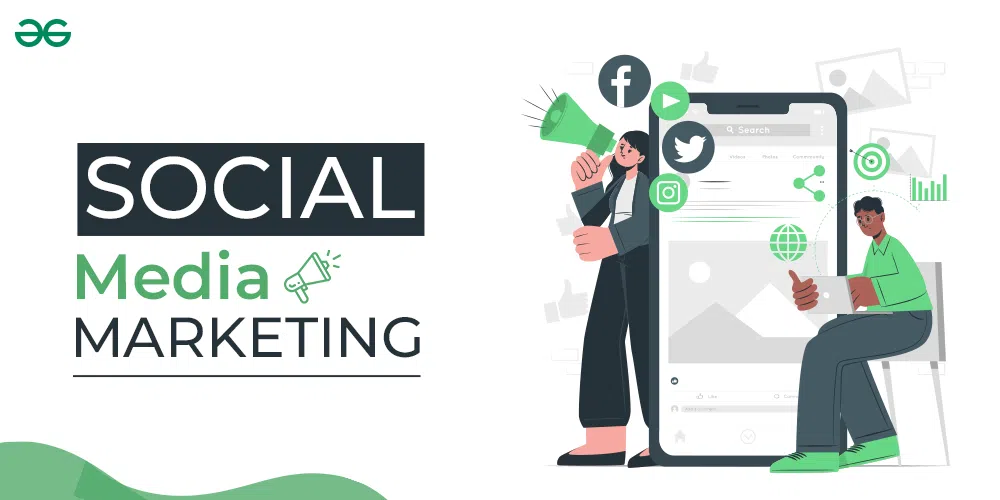
SOCIAL MEDIA MARKETING
Social media marketing (SMM) is the use of social media platforms to build a brand, increase sales, and drive website traffic. it allows companies to connect with customers, gather data, and measure the effectiveness of their marketing efforts in real time. The power of Social media marketing is driven by the unparalleled capacity of social media in three core marketing areas: connection, interaction, and customer data. not only does social media enable businesses to connect with customers in previously impossible ways, but there is also an extraordinary range of avenues to connect with targeted audiences – from content platforms (like youtube) and social sites (like facebook) to microblogging services (like X). A well designed social media marketing plan delivers another invaluable resource to boost marketing outcomes: customer data rather than being overwhelmed by the 3Vs of big data ( volume, variety,and velocity), SMM tools have the capacity not only to extract customer data but also to turn this gold into actionable market analysis – or even to use the data to crowdsource new strategies. BENEFITS OF SOCIAL MEDIA MARKETING :- The pros of social media marketing are obvious to any busines owner who has invested time in developing their own digital media strategy. BUILDING BRAND AWARENESS :- Today, there are over 5 billion social media users worldwide. by creating engaging content, you can spread the word about your brand to this enormous global audience. ENHANCED LEAD GENERATION :- Social media marketing is the ideal way to drive traffic to your website. this directs potential customers to your bottom-of-the-funnel content, helping you generate leads. MORE TRUST WITH CUSTOMERS :- 81% of people believe social media increases brand accountability. This translates into greater trust for brands that show their values and authenticity through social media. BOOSTED SALES :- More brand awareness, more qualified leads, a stronger reputation, and better customer service are all equal. one thing is that there are more opportunities to make new and repeat sales that will grow your bottom line over the long term. Social Media Marketing is an essential part of digital marketing. It helps businesses reach their targeted audience, build strong customer relationships, and grow their brand online. with the right strategy, consistent posting, and engaging content, businesses can increase their visibility, generate more leads and achieve long term success.
SEARCH ENGINE MARKETING (SEM)
Search engine marketing (SEM) is an internet marketing strategy that uses both paid advertising and search engine optimization techniques to increase the visibility of a website on search engine results pages (SERPs). using this method, marketers promote targeted content to a specific base of consumers to drive web traffic and convert viewers into paying customers. Search engine marketing helps improve a website’s ranking and position on SERPs to boost visibility and attract individuals ready to purchase. As a marketing strategy, SEM drive qualified web traffic and boost sales. SEM helps marketers meet marketing goals focused on increasing web traffic and sales since it is a targeted approach that allows companies to deliver ads to a specific group of people considered ideal buyers for that company’s product or service. POSITIVE AND NEGATIVE EFFECTS OF USING SEARCH ENGINE MARKETING Before using SEM as an internet marketing strategy for your marketing campaigns, it’s helpful to consider both the benefits and drawbacks of the strategy. SEM has the potential to increase web traffic and boost sales in a short period of time but it does require smart budgeting and attention to metrics to ensure you stay within your marketing budget and get the most out of your SEM efforts. POSITIVE EFFECTS :- Digital marketing proffessionals find many benefits of SEM in their endeavors. SEM is measurable, targetes, and efficient, making it a well-rounded and effective approach for companies looking to convert consumers to paying customers. when a smaller company is just getting started, SEM has the potential to increase visibility and introduce the brand to target consumers via SERPs. Other benefits of using SEM include :- Effective strategies for driving traffic. Better ad positioning on SERPs. Applicable for many different industries, products, and services. Helpful in building a larger customer base. NEGATIVE EFFECTS :-While SEM is a hhighly effective method for targeting a marketer’s ideal consumer, it may not be the most effective method for everyone. Some drawbacks include the need to manage ads and keywords, as well as the per conversion. To get the most out of your PPC efforts when using SEM as a marketing strategy, you may want to consider the possible cons of this approach to better prepare for the most effective digital marketing campaigns.
SEARCH ENGINE OPTIMIZATION
Search engine optimization (SEO) is the practice of improving the visibility and overall performance of websites and web pages in search engine result pages (SERPs). It focuses on increasing the quantity and quality of traffic from unpaid (organic) search results rather than paid advertising. SEO applies to multiple search formats, including web, images, video, news, academic, and verticle search engines, as well as AI-assisted search interfaces. SEO commonly used as a part of a broader digital marketing strategy and involves optimizing technical infrastructure, content relevance, and authority signals to improve rankings for user queries. The ojective of SEO is to attract users who are actively searching for information, products, or services, thereby improving brand visibility, user engagement, and conversions. Effective SEO requires understanding user search intent, targeting the right keywords, and ensuring a strong technical foundation. When done well, SEO drives targeted traffic, attracts potential customers, and strengthens rand awareness, ultimately supporting leads, sales, and revenue. TYPES OF SEO SEO is all about optimizing your website to increase your online visibility. but what do we mean by that? What exactly should you be optimizing? well, there’s a lot you can do and it can be divided up into three main areas. Technical SEO :- Technical SEO is all about improving a website’s technical aspects to improve user experience and make search engines understand your pages. Aspects that fall under technical SEO are:-– Loading time of your pages– Making the right parts of your site crawlable for search engines– The amount of dead links on your site– Security – Use of structured data ON-PAGE SEO :- Although technical SEO is a part of on-page SEO , this can be seen as ” under-the-hood ” optimization to improve your pages. The other efforts that can be categorized as on-page SEO are targeted at optimizing the content on a page. Think of :- – The quality of your content– Use of the proper keywords– Site structure– Internal linking– Well-thought-out URLs, titles, and alt tags OFF-PAGE SEO :- In contrast to on-page SEO, off-page SEO entails everything you do for SEO outside of page optimization. Such as external link building, social media and local SEO (off-site). This is focused on growing your reach and building your brand to attract more traffic. An important part is link building, getting other relevant websites to link to your content. This can really help boost your visibility and improve your reputation as an authority- see links as like votes of confidence from other websites.
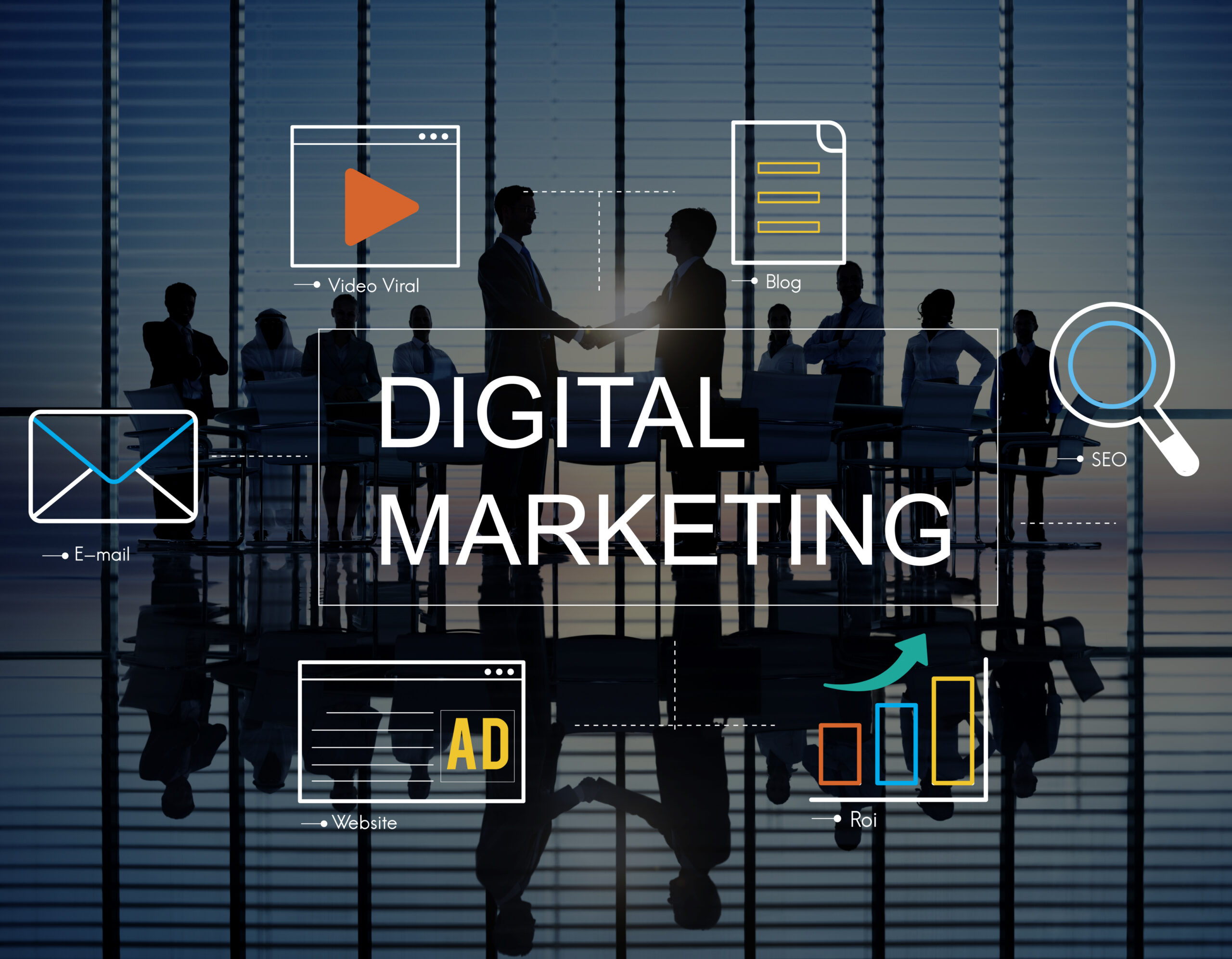
DIGITAL MARKETING
Digital Marketing is the use of websites, apps, mobiles, social media, search engines, and other digital means to promote and sell products and services. it allows businesses to target specific audiences and measure performance in real time.