
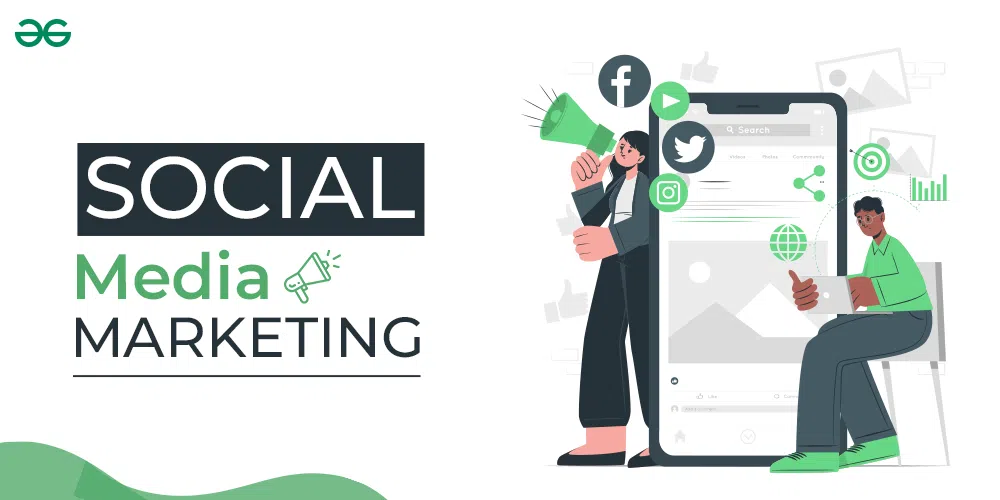
Social media marketing (SMM) is the use of social media platforms to build a brand, increase sales, and drive website traffic. it allows companies to connect with customers, gather data, and measure the effectiveness of their marketing efforts in real time. The power of Social media marketing is driven by the unparalleled capacity of social media in three core marketing areas: connection, interaction, and customer data. not only does social media enable businesses to connect with customers in previously impossible ways, but there is also an extraordinary range of avenues to connect with targeted audiences – from content platforms (like youtube) and social sites (like facebook) to microblogging services (like X). A well designed social media marketing plan delivers another invaluable resource to boost marketing outcomes: customer data rather than being overwhelmed by the 3Vs of big data ( volume, variety,and velocity), SMM tools have the capacity not only to extract customer data but also to turn this gold into actionable market analysis – or even to use the data to crowdsource new strategies. BENEFITS OF SOCIAL MEDIA MARKETING :- The pros of social media marketing are obvious to any busines owner who has invested time in developing their own digital media strategy. BUILDING BRAND AWARENESS :- Today, there are over 5 billion social media users worldwide. by creating engaging content, you can spread the word about your brand to this enormous global audience. ENHANCED LEAD GENERATION :- Social media marketing is the ideal way to drive traffic to your website. this directs potential customers to your bottom-of-the-funnel content, helping you generate leads. MORE TRUST WITH CUSTOMERS :- 81% of people believe social media increases brand accountability. This translates into greater trust for brands that show their values and authenticity through social media. BOOSTED SALES :- More brand awareness, more qualified leads, a stronger reputation, and better customer service are all equal. one thing is that there are more opportunities to make new and repeat sales that will grow your bottom line over the long term. Social Media Marketing is an essential part of digital marketing. It helps businesses reach their targeted audience, build strong customer relationships, and grow their brand online. with the right strategy, consistent posting, and engaging content, businesses can increase their visibility, generate more leads and achieve long term success.
SEARCH ENGINE MARKETING (SEM)
Search engine marketing (SEM) is an internet marketing strategy that uses both paid advertising and search engine optimization techniques to increase the visibility of a website on search engine results pages (SERPs). using this method, marketers promote targeted content to a specific base of consumers to drive web traffic and convert viewers into paying customers. Search engine marketing helps improve a website’s ranking and position on SERPs to boost visibility and attract individuals ready to purchase. As a marketing strategy, SEM drive qualified web traffic and boost sales. SEM helps marketers meet marketing goals focused on increasing web traffic and sales since it is a targeted approach that allows companies to deliver ads to a specific group of people considered ideal buyers for that company’s product or service. POSITIVE AND NEGATIVE EFFECTS OF USING SEARCH ENGINE MARKETING Before using SEM as an internet marketing strategy for your marketing campaigns, it’s helpful to consider both the benefits and drawbacks of the strategy. SEM has the potential to increase web traffic and boost sales in a short period of time but it does require smart budgeting and attention to metrics to ensure you stay within your marketing budget and get the most out of your SEM efforts. POSITIVE EFFECTS :- Digital marketing proffessionals find many benefits of SEM in their endeavors. SEM is measurable, targetes, and efficient, making it a well-rounded and effective approach for companies looking to convert consumers to paying customers. when a smaller company is just getting started, SEM has the potential to increase visibility and introduce the brand to target consumers via SERPs. Other benefits of using SEM include :- Effective strategies for driving traffic. Better ad positioning on SERPs. Applicable for many different industries, products, and services. Helpful in building a larger customer base. NEGATIVE EFFECTS :-While SEM is a hhighly effective method for targeting a marketer’s ideal consumer, it may not be the most effective method for everyone. Some drawbacks include the need to manage ads and keywords, as well as the per conversion. To get the most out of your PPC efforts when using SEM as a marketing strategy, you may want to consider the possible cons of this approach to better prepare for the most effective digital marketing campaigns.
SEARCH ENGINE OPTIMIZATION
Search engine optimization (SEO) is the practice of improving the visibility and overall performance of websites and web pages in search engine result pages (SERPs). It focuses on increasing the quantity and quality of traffic from unpaid (organic) search results rather than paid advertising. SEO applies to multiple search formats, including web, images, video, news, academic, and verticle search engines, as well as AI-assisted search interfaces. SEO commonly used as a part of a broader digital marketing strategy and involves optimizing technical infrastructure, content relevance, and authority signals to improve rankings for user queries. The ojective of SEO is to attract users who are actively searching for information, products, or services, thereby improving brand visibility, user engagement, and conversions. Effective SEO requires understanding user search intent, targeting the right keywords, and ensuring a strong technical foundation. When done well, SEO drives targeted traffic, attracts potential customers, and strengthens rand awareness, ultimately supporting leads, sales, and revenue. TYPES OF SEO SEO is all about optimizing your website to increase your online visibility. but what do we mean by that? What exactly should you be optimizing? well, there’s a lot you can do and it can be divided up into three main areas. Technical SEO :- Technical SEO is all about improving a website’s technical aspects to improve user experience and make search engines understand your pages. Aspects that fall under technical SEO are:-– Loading time of your pages– Making the right parts of your site crawlable for search engines– The amount of dead links on your site– Security – Use of structured data ON-PAGE SEO :- Although technical SEO is a part of on-page SEO , this can be seen as ” under-the-hood ” optimization to improve your pages. The other efforts that can be categorized as on-page SEO are targeted at optimizing the content on a page. Think of :- – The quality of your content– Use of the proper keywords– Site structure– Internal linking– Well-thought-out URLs, titles, and alt tags OFF-PAGE SEO :- In contrast to on-page SEO, off-page SEO entails everything you do for SEO outside of page optimization. Such as external link building, social media and local SEO (off-site). This is focused on growing your reach and building your brand to attract more traffic. An important part is link building, getting other relevant websites to link to your content. This can really help boost your visibility and improve your reputation as an authority- see links as like votes of confidence from other websites.
DIGITAL MARKETING
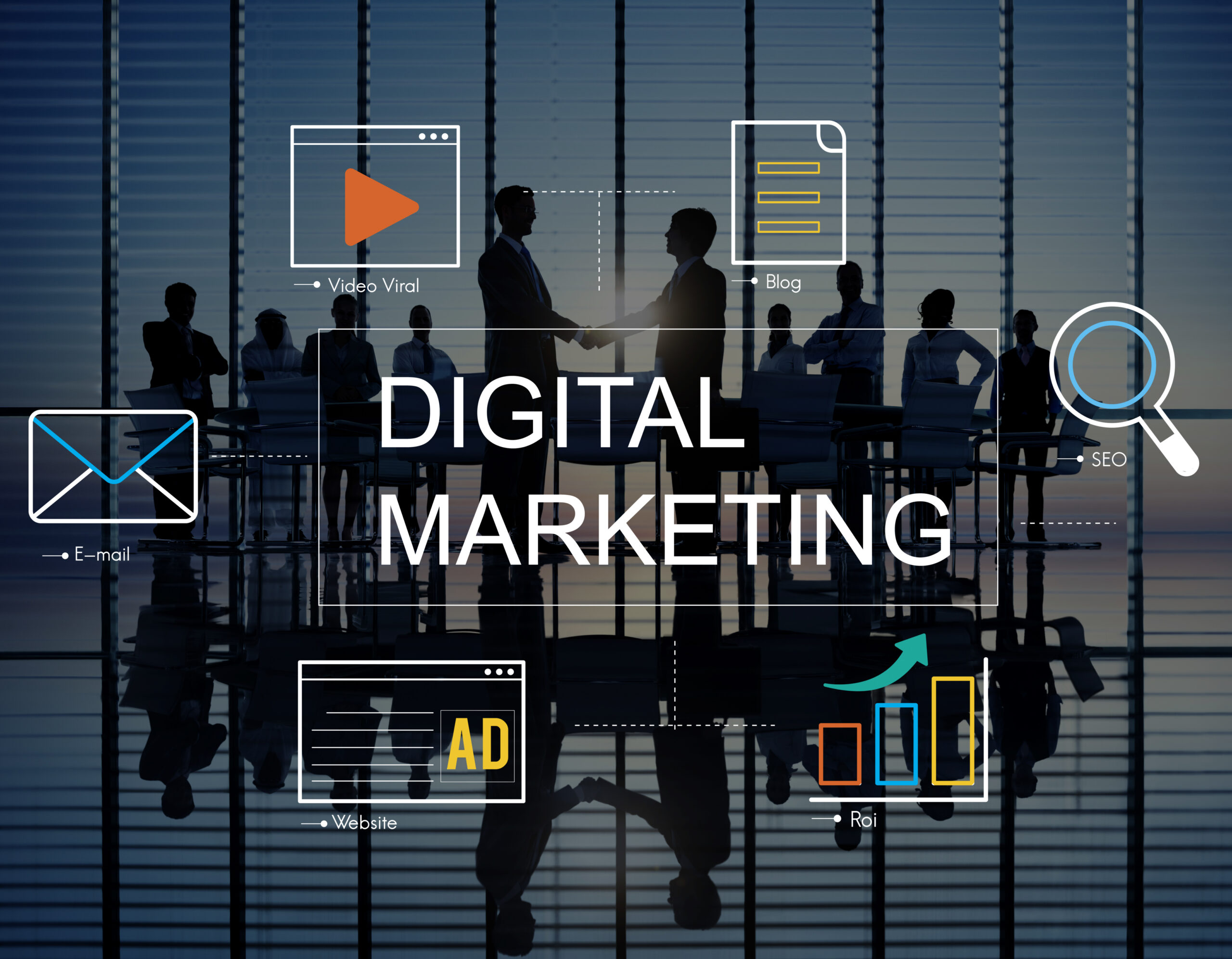
Digital Marketing is the use of websites, apps, mobiles, social media, search engines, and other digital means to promote and sell products and services. it allows businesses to target specific audiences and measure performance in real time.